
Rajputi vs Rajasthani Aad: Is There Really a Difference?
Traditional jewellery has always been an important part of Rajasthan's culture. From heavy gold necklaces to detailed kundan ornaments, every piece has its own design and significance. Among these traditional ornaments, the Aad necklace holds a special place in bridal jewellery.
While exploring traditional jewellery, buyers often come across two names: Rajputi Aad and Rajasthani Aad. Both look similar, and many jewellery stores use these names for the same type of necklace. This creates confusion among buyers who want to understand whether they are different jewellery designs.
The simple answer is that Rajputi Aad and Rajasthani Aad are closely connected. Both belong to Rajasthan's traditional jewellery heritage. However, the terms can have slightly different meanings depending on cultural background, design preferences, and how jewellers describe their collections.
This guide explains the similarities, differences, traditional significance, and important factors to consider when choosing an Aad necklace.
What Is an Aad Necklace?
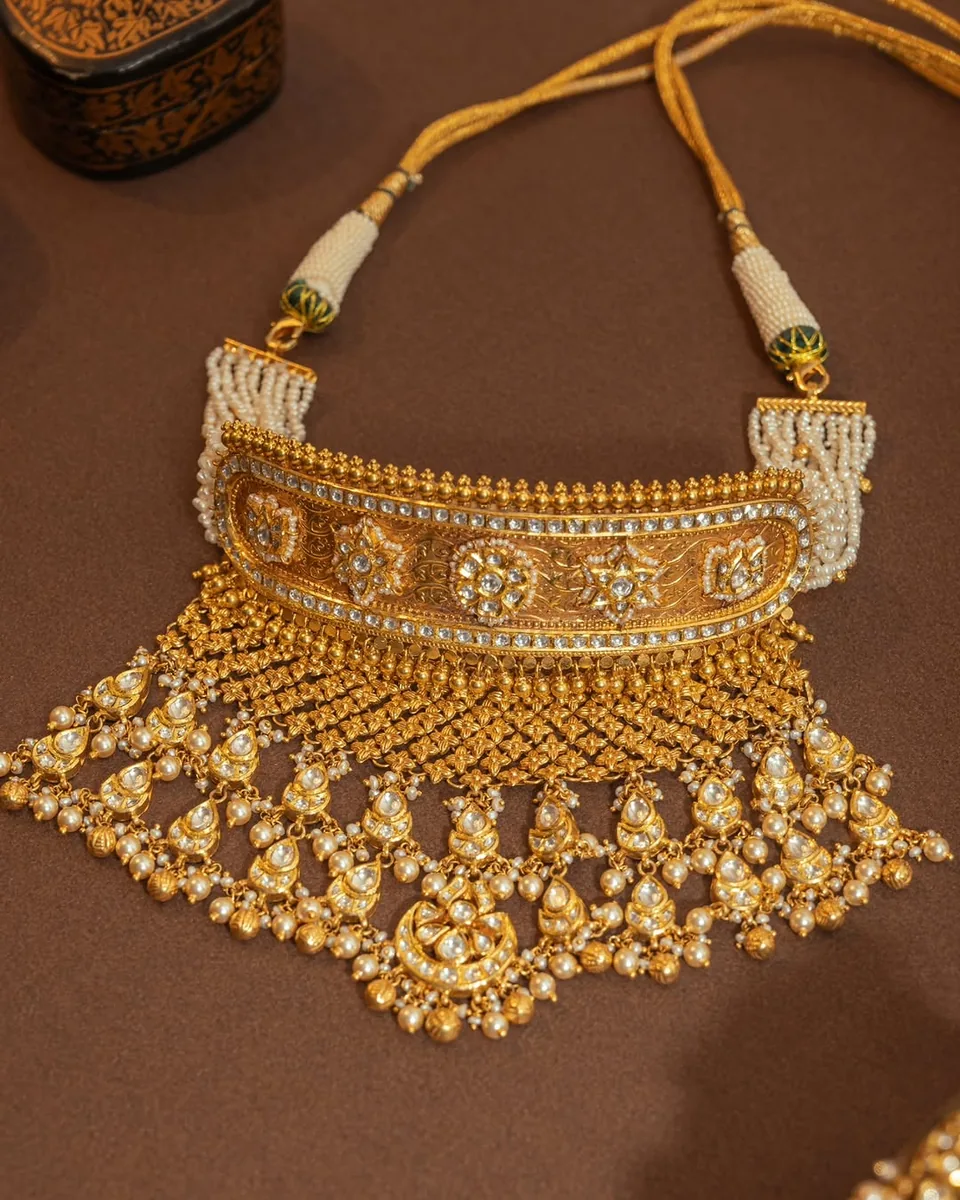
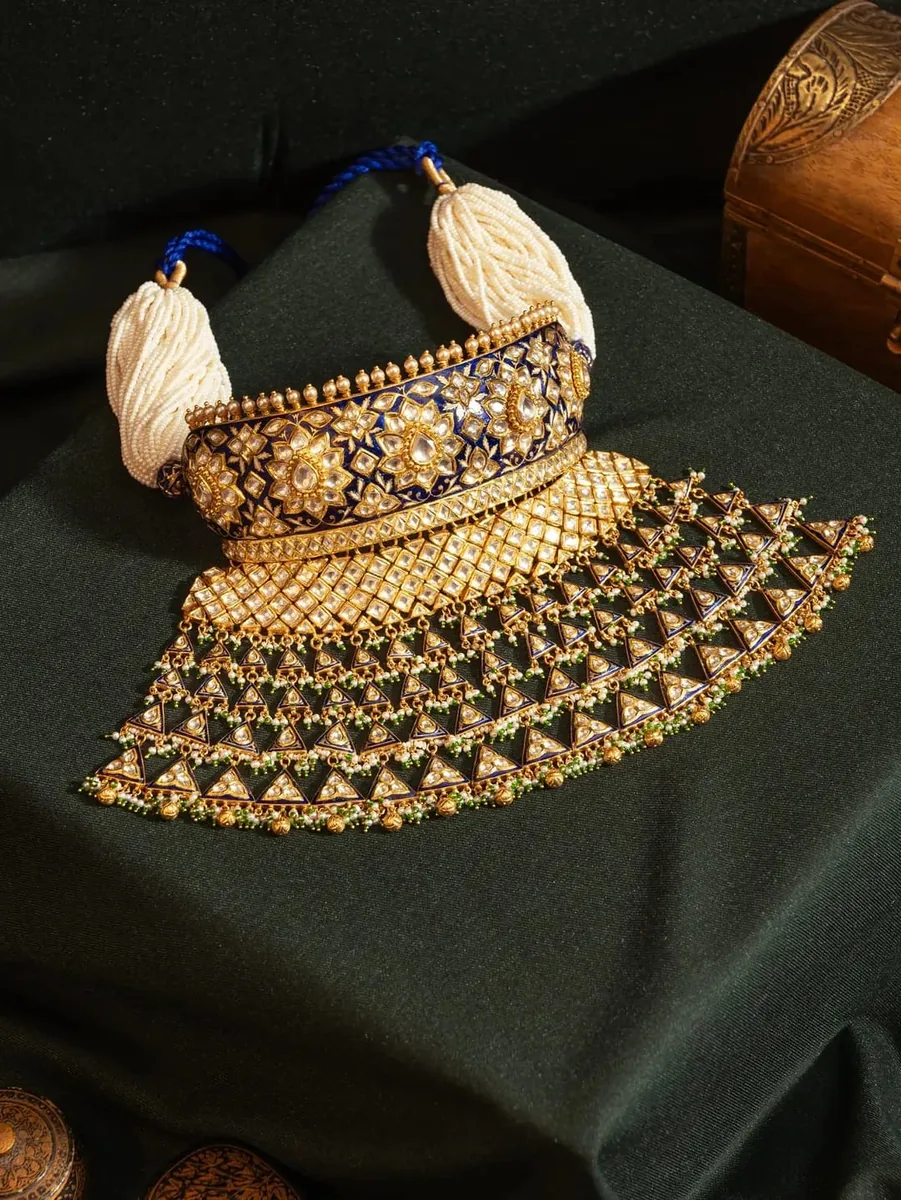
An Aad is a traditional necklace associated with the jewellery of Rajasthan. It is recognised by its broad central design, which generally sits close to the neck or extends across the upper chest.
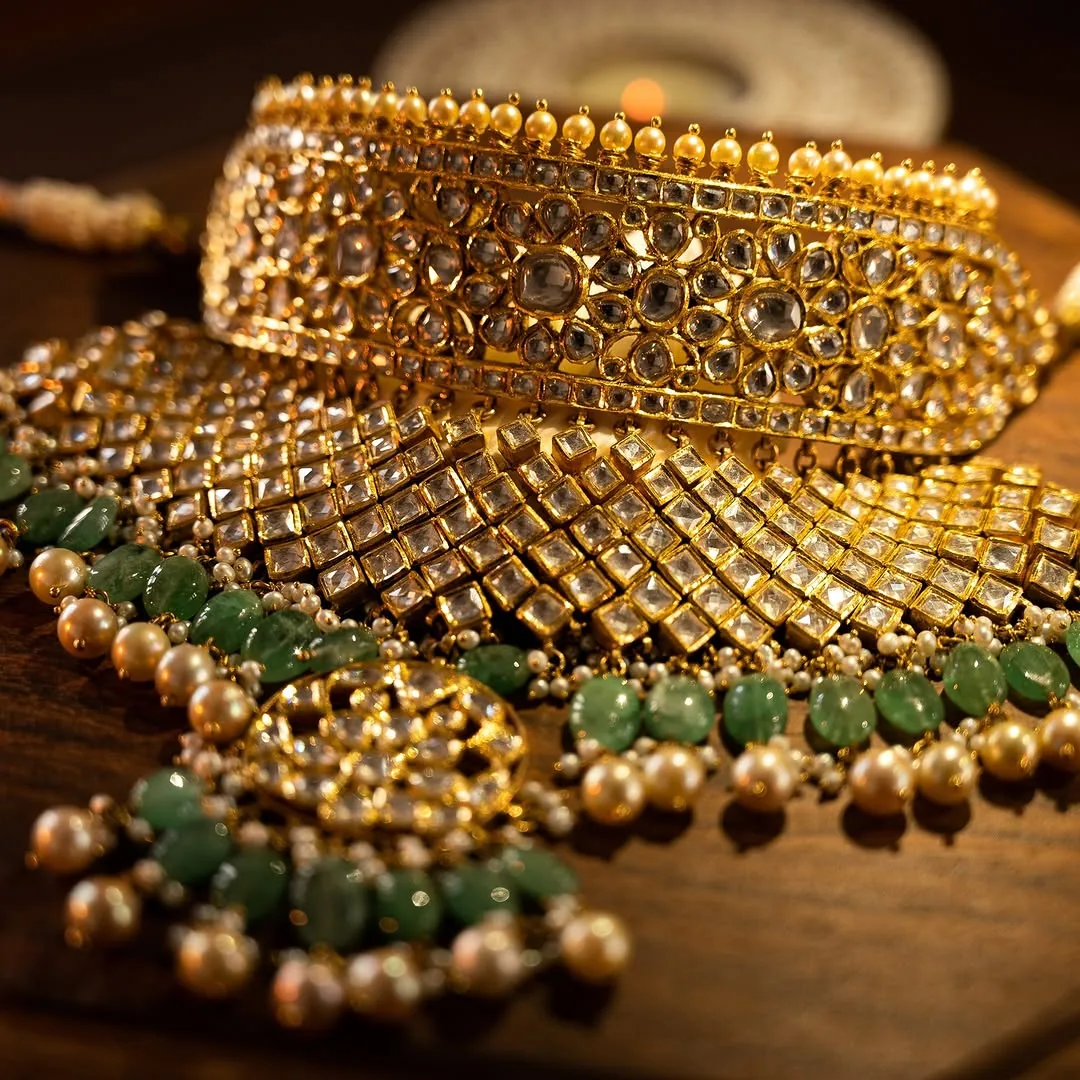
Unlike regular necklaces that have small pendants or thin chains, an Aad usually features a wide decorative section. Traditional designs often include gold work, kundan stones, colourful gemstones, and pearl strings.
The necklace is particularly popular during weddings, religious celebrations, and family functions.
Some common features of traditional Aad jewellery include:
- A broad rectangular, square, or slightly curved central design.
- Detailed gold craftsmanship.
- Kundan, Polki, or coloured stone settings.
- Pearl strings or decorative side attachments.
- A traditional fastening system, often using a cord or dori.
The exact shape and size can change according to the jewellery design and the traditions followed by different families.
Today, Aad necklaces are available in traditional and modern styles, making them suitable for different bridal outfits and festive occasions.
What Is a Rajputi Aad?
A Rajputi Aad is an Aad necklace closely associated with the traditional jewellery worn by Rajput women.
Rajputi jewellery is known for its elaborate craftsmanship, prominent gold designs, and connection with family traditions. The Aad is one of the important ornaments included in many traditional Rajputi bridal jewellery sets.
A Rajputi Aad often features a broad central section decorated with intricate gold work, kundan settings, or coloured stones. Some designs also include multiple strings of small pearls that connect the central section to the fastening.
The appearance can vary depending on the design. Some necklaces have a large rectangular centre, while others use curved or decorative shapes.
Traditional Significance of Rajputi Aad
For many Rajput families, jewellery is more than an accessory. Traditional ornaments may be connected with weddings, family customs, and jewellery passed from one generation to another.
An Aad necklace can form an important part of a bride's traditional appearance, especially when worn with a Rajputi poshak.
It may also be paired with other ornaments such as Borla, Rakhdi, Nath, Bajuband, and traditional gold bangles.
However, not every Rajputi Aad follows one fixed design. Regional preferences, family traditions, and personal choices can influence its appearance.
What Is a Rajasthani Aad?
A Rajasthani Aad is a broader term used for Aad necklaces associated with Rajasthan's jewellery traditions.
Rajasthan has several communities and regional styles, each contributing to the state's jewellery heritage. As a result, the term Rajasthani Aad can include Aad necklaces worn in Rajputi traditions as well as designs popular among other communities.
A Rajasthani Aad generally has the same recognisable broad necklace structure. However, the decorative details, stones, proportions, and finishing can differ.
Some designs feature traditional kundan work, while others use plain gold patterns, colourful stones, or pearl detailing.
Modern jewellery collections may also include lighter Aad necklaces that retain the traditional shape but are designed for easier wear.
Why Is Rajasthani Aad Popular?
Rajasthani Aad jewellery is popular because it creates a distinctive traditional neckline.
The broad design makes it a noticeable part of bridal jewellery without requiring several additional necklaces.
It also pairs well with traditional clothing, including Rajasthani poshaks, sarees, and bridal lehengas.
Many buyers choose a Rajasthani Aad because they appreciate its regional design and want jewellery that can be worn during weddings and important celebrations.
Rajputi vs Rajasthani Aad: What Is the Main Difference?
The most important point is that Rajputi Aad and Rajasthani Aad are not two completely separate jewellery categories.
A Rajputi Aad belongs to the wider tradition of Rajasthani Aad jewellery.
The difference is mainly in how the terms are used.
Rajputi Aad specifically highlights the necklace's association with Rajput cultural traditions. Rajasthani Aad is a general name that covers the traditional Aad designs associated with Rajasthan.
Some jewellers may use Rajputi Aad for heavier, elaborate bridal necklaces and Rajasthani Aad for a wider range of traditional and modern designs. However, this is a naming preference rather than a fixed rule.
Rajputi Aad vs Rajasthani Aad: Comparison Table
FeatureRajputi AadRajasthani AadCultural associationClosely connected with Rajput traditionsConnected with Rajasthan's wider jewellery traditionsTraditional designOften associated with elaborate bridal designsIncludes elaborate and simpler traditional designsShapeBroad rectangular, square, or curved structureSimilar broad Aad structureMaterialsGold, kundan, Polki, pearls, and coloured stonesGold, kundan, Polki, pearls, and other decorative materialsOccasionsWeddings and traditional family functionsWeddings, festivals, and family celebrationsModern variationsAvailable in traditional and updated designsAvailable in traditional, lightweight, and modern designs
These are general descriptions, not strict design rules. A necklace sold as a Rajasthani Aad may look identical to one sold as a Rajputi Aad.
Are Rajputi Aad and Rajasthani Aad Designs Different?
There is no universal design rule that clearly separates Rajputi Aad from Rajasthani Aad.
Both can feature similar shapes, stone settings, decorative borders, and gold patterns.
However, buyers may notice differences when comparing individual necklaces.
1. Size and Width
Some traditional Aad necklaces have a broad central section that covers a noticeable part of the neckline.
Other designs are smaller and sit closer to the throat.
The width depends on the particular design rather than whether the necklace is called Rajputi or Rajasthani.
2. Gold Work
Gold Aad necklaces may feature detailed patterns, floral motifs, geometric borders, or traditional decorative elements.
Some designs focus on the beauty of gold itself, while others use more stone settings.
Buyers looking for a traditional Rajputi gold Aad design often prefer necklaces with detailed craftsmanship and a prominent central structure.
3. Kundan and Polki Work
Kundan and Polki are commonly associated with traditional Rajasthani jewellery.
Kundan generally refers to a traditional technique of setting stones, while Polki refers to uncut diamonds used in jewellery.
Both can be included in Aad necklaces. However, the presence of kundan or Polki does not automatically make a necklace Rajputi rather than Rajasthani.
4. Pearl Detailing
Some Aad designs feature multiple strings of small pearls along the sides.
These strings connect the main decorative section with the necklace fastening and add to its traditional appearance.
Other Aad necklaces may use gold links, chains, or decorative attachments instead.
5. Overall Appearance
Traditional bridal Aad necklaces often have an elaborate appearance, while modern versions may use a simpler structure.
Both Rajputi and Rajasthani Aad designs are available in these styles.
Therefore, the actual design should always receive more attention than the product name.
Cultural Importance of Aad Jewellery in Rajasthan
Traditional jewellery in Rajasthan reflects a long history of craftsmanship, regional customs, and family celebrations.
Gold ornaments have been valued for their appearance, material value, and connection with important life events.
The Aad necklace is particularly associated with traditional bridal dressing.
For some families, an Aad may be selected specifically for a wedding. In others, it may be an existing family ornament that is worn during important ceremonies.
Older jewellery pieces may also be preserved because of their craftsmanship and sentimental importance.
The designs seen today reflect both these traditional influences and changing jewellery preferences.
While some buyers prefer elaborate gold Aad necklaces, others choose simpler versions that can be worn more frequently.
This combination of traditional importance and changing design preferences has helped Aad jewellery remain relevant.
Different Types of Rajputi and Rajasthani Aad Jewellery
Several Aad styles are available in jewellery collections today.
Traditional Gold Aad
A traditional gold Aad features a broad decorative structure with gold as the main visible element.
It may contain engraved patterns, detailed borders, or decorative motifs.
This style is often preferred by buyers looking for a necklace with a traditional gold appearance.
Kundan Aad Necklace
A kundan Aad includes stones arranged using traditional kundan-setting techniques.
The stones can create detailed patterns across the central section. Some designs combine them with colourful accents and pearl strings.
Polki Aad Necklace
A Polki Aad uses uncut diamonds in its decorative design.
These necklaces can have an elaborate bridal appearance and may include additional gold detailing or coloured stones.
Their prices depend on several factors, including the materials and the quality of craftsmanship.
Mini Aad Necklace
A mini Aad is a smaller variation of the traditional Aad design.
It generally has a shorter or narrower decorative section compared with a large bridal Aad.
This style can appeal to buyers who prefer a traditional design with less coverage around the neckline.
Modern Aad Designs
Modern Aad necklaces retain elements of the traditional structure while introducing changes in size, pattern, and overall appearance.
Some designs are relatively lightweight, making them easier to pair with different outfits.
These options allow buyers to select an Aad according to the occasion and personal preference.
How to Choose Between Rajputi Aad and Rajasthani Aad
Since the names often overlap, buyers should focus on the necklace itself rather than treating Rajputi and Rajasthani Aad as completely different categories.
Consider the Occasion
A wedding may call for a broader and more detailed Aad, while a smaller design may be easier to wear during festivals or family gatherings.
The occasion can help determine the size and overall appearance of the necklace.
Check the Gold Purity
When purchasing a gold Aad necklace, buyers should understand the gold purity and request appropriate hallmarking details.
The BIS hallmark and HUID can help buyers verify important information about hallmarked gold jewellery.
Gold purity should not be judged only by the colour or shine of the necklace.
Compare Weight and Comfort
Traditional Aad necklaces can contain substantial gold work and decorative materials.
The overall weight affects comfort, especially when the necklace is worn for several hours.
Buyers should check how the necklace sits around the neck and whether its fastening provides a secure fit.
Examine the Craftsmanship
The finishing of an Aad is an important part of its appearance.
Buyers should examine the stone settings, decorative patterns, side attachments, and fastening arrangement.
They should also check whether the edges are comfortable and whether the necklace maintains its intended shape when worn.
Understand the Price
The price of a gold Aad necklace can depend on gold purity, net gold weight, stones, making charges, and design complexity.
A necklace with detailed stone work may have a different pricing structure from one made mainly of gold.
An itemised price breakdown helps buyers understand what they are paying for.
How to Style an Aad Necklace with Traditional Outfits
An Aad necklace can be styled with different traditional outfits depending on its size and design.
With a Rajputi Poshak
A traditional Aad is a natural choice with a Rajputi poshak.
It can be paired with a Borla, traditional earrings, bangles, and other matching ornaments.
The necklace's broad shape helps create the familiar traditional neckline associated with Rajputi bridal jewellery.
With a Bridal Lehenga
A gold or kundan Aad can also complement a bridal lehenga.
The jewellery can be selected according to the outfit's neckline, embroidery, and colours.
A heavily decorated outfit may pair well with a simpler Aad, while a relatively plain outfit can allow an elaborate necklace to receive more attention.
With a Saree
Smaller Aad designs may work well with traditional sarees.
A gold Aad can complement silk fabrics and festive colours, especially when paired with matching earrings.
With Layered Jewellery
Some traditional bridal looks combine an Aad with longer necklaces.
The shorter Aad creates a broad neckline, while a longer necklace adds another layer.
Careful selection of lengths helps prevent the pieces from overlapping awkwardly.
Is Rajputi Aad More Expensive Than Rajasthani Aad?
A Rajputi Aad is not automatically more expensive than a Rajasthani Aad.
Since both terms can describe similar jewellery designs, the name alone does not determine the price.
The main pricing factors include:
- Gold purity and weight.
- Type, quantity, and quality of stones.
- Complexity of craftsmanship.
- Making charges.
- Additional materials and decorative details.
For example, a heavy gold Aad with elaborate craftsmanship may cost more than a smaller necklace with a simple design, regardless of how either piece is named.
Similarly, a Polki Aad may have a different price structure from a plain gold Aad.
Buyers should compare the actual specifications instead of assuming that Rajputi jewellery always carries a higher price.
Where Can Buyers Explore Traditional Aad Jewellery?
Buyers interested in traditional Aad necklaces can explore jewellery collections that include both Rajputi and Rajasthani designs.
Jewellers familiar with traditional Rajasthani ornaments can help explain the differences in shape, gold work, size, and stone settings.
At Pure Gold Jewellers, buyers can explore Rajasthani Aad jewellery designs and compare styles according to their preferences.
When visiting a jewellery store, it is useful to check the necklace's dimensions, gold specifications, fastening, and complete price breakdown before making a decision.
Find Your Traditional Rajasthani Aad Jewellery at Pure Gold
Visit our showroom or book a video appointment.
Book AppointmentFrequently Asked Questions About Rajputi and Rajasthani Aad
1. Are Rajputi Aad and Rajasthani Aad the same?
They are closely related and often refer to the same traditional necklace style. Rajputi Aad highlights its association with Rajput traditions, while Rajasthani Aad is a broader regional term.
2. What is the traditional shape of an Aad necklace?
An Aad generally features a broad rectangular, square, or curved decorative section. Its exact proportions can vary according to the design.
3. Is Aad jewellery made only in gold?
Traditional Aad necklaces are strongly associated with gold, but modern jewellery collections also include versions made using other materials.
4. Can an Aad be worn with a saree?
Yes. Aad necklaces, particularly smaller designs, can be paired with traditional sarees for weddings and festive functions.
5. What is the difference between Aad and Timaniya?
The terms sometimes overlap in jewellery descriptions. Depending on local usage, Timaniya may refer to a smaller choker-style ornament, while Aad often refers to a broader necklace. However, the naming is not consistent everywhere.
6. Is a Rajputi Aad suitable only for brides?
No. Although Aad jewellery is commonly associated with bridal wear, it can also be worn during festivals, religious ceremonies, and family celebrations.
7. Which is better, a heavy Aad or a mini Aad?
Neither is universally better. A heavy Aad may suit an elaborate bridal look, while a mini Aad may be more comfortable for occasions requiring lighter jewellery.
Conclusion
The difference between Rajputi Aad and Rajasthani Aad is mainly related to cultural association and naming rather than a completely different jewellery structure.
Rajputi Aad refers more specifically to the Aad necklaces associated with Rajput traditions, while Rajasthani Aad covers the wider traditional jewellery style of Rajasthan.
Both can feature broad gold designs, kundan or Polki settings, pearl detailing, and intricate craftsmanship.
For buyers, the most important factors are the necklace's actual design, gold purity, craftsmanship, comfort, and price.
Understanding these details makes it easier to select an Aad necklace that reflects personal preference while appreciating the traditional jewellery heritage of Rajasthan.